Run an assistant across messaging channels, tools, and your own devices.
Useful forPersonal and team assistants across channels.
392.6K GitHub starsAs of MIT
Checked  Talk to us
Nextex research
Find tools for your AI workflow. Compare what they do, read the licence and check the evidence before you choose.
120 projects across the collection
Run agents
Control the tools, context and execution loop around an agent.
Run an assistant across messaging channels, tools, and your own devices.
Useful forPersonal and team assistants across channels.
Run an assistant with persistent memory, reusable skills, and messaging channels.
Useful forLong-running personal agents that retain useful context.
Build a small agent runtime around a coding agent, extensions, and an SDK.
Useful forTeams that want to adapt the agent loop.
Manage coding agents, workspaces, and automations through Agent Canvas.
Useful forDevelopers coordinating agents across local and remote environments.
Run a tool-using agent through desktop, terminal, and API interfaces.
Useful forExtensible assistants for developer and business tasks.
Run a lightweight assistant with messaging, tools, memory, and scheduled work.
Useful forA small Python agent that can be self-hosted or embedded.
Run channel-connected agents in separate Linux containers.
Useful forSmall teams that want isolated agent workspaces.
Add planning, filesystem tools, memory, and subagents to long-running agents.
Useful forTeams building agents that handle multi-step work.
Run a configurable assistant with computer tools and cooperating agents.
Useful forSelf-hosted agents that need a working Linux environment.
Run stateful agents with persistent memory, skills, permissions, and schedules.
Useful forAssistants that continue work across sessions.
Build software
Work with agents that read, write and test code.
Use a coding agent across terminal, desktop, and editor workflows.
Useful forDevelopers who want a choice of model providers.
Inspect and build the editor source behind agent planning, editing, and command tools.
Useful forTeams evaluating or extending an editor-integrated agent client.
Work with a coding agent that reads, edits, and runs code in your repository.
Useful forTerminal-based implementation and code review.
Use native and external coding agents in a fast, collaborative code editor.
Useful forDevelopers who want agent threads and code review inside an editor.
Plan changes, edit files, run commands, and inspect results with a coding agent.
Useful forDevelopers who want visible plans and reviewable edits.
Run a terminal coding agent with repository tools and editor integrations.
Useful forDevelopers testing model choices in a coding-agent workflow.
Use an extensible coding agent with terminal and editor interfaces.
Useful forTeams that want multiple model and coding-workflow options.
Build and preview full-stack applications in an AI coding workspace.
Useful forBrowser-based application prototyping with a choice of models.
Plan and apply agent-assisted code changes inside Neovim.
Useful forNeovim users who want AI editing and tool use in their editor.
Use a small software-engineering agent for code tasks and experiments.
Useful forResearchers and developers who want an inspectable agent baseline.
Connect agents
Build applications with tools, state and coordinated agents.
Build cooperating agents and structured flows in Python.
Useful forRole-based agent teams and event-driven workflows.
Build stateful agent workflows with persistence and human review points.
Useful forAgents that need resumable execution and explicit control flow.
Build agents, teams, and workflows with a Python runtime and service layer.
Useful forTeams that want an SDK and an API runtime in one ecosystem.
Compose agents with tools, context, memory, permissions, and service interfaces.
Useful forTeams building configurable Python agent services.
Compose Python agents with tools, handoffs, sessions, and tracing.
Useful forApplications that need a small set of agent-building primitives.
Build compact agents that act through code or structured tool calls.
Useful forExperiments with model-driven tools and code execution.
Build TypeScript agents, workflows, memory, and retrieval into applications.
Useful forTypeScript teams that want integrated agent development tools.
Build Python agents and workflows with tools, state, and runtime services.
Useful forCode-first agent applications, including Google model deployments.
Build typed Python agents with validated outputs, tools, and model adapters.
Useful forPython applications that need structured results and clear types.
Build agents and multi-step workflows in Python and .NET.
Useful forTeams working across Microsoft and other model ecosystems.
Test the boundaries
Probe models and applications for security weaknesses.
AI agents run application security tests and produce vulnerability findings and proposed fixes.
Useful forAuthorized application penetration testing.
Test prompts and models, compare outputs, and run automated red-team evaluations.
Useful forLLM regression and security checks in development pipelines.
Probe language models for weaknesses such as prompt injection, data leakage, and harmful output.
Useful forRepeatable vulnerability testing across model endpoints.
Test machine learning models against evasion, poisoning, extraction and inference attacks.
Useful forSecurity teams testing models across text, images, audio and tabular data.
Generate tests and evaluate agent behavior, vulnerabilities, and retrieval quality.
Useful forMulti-turn agent testing and RAG evaluation.
A framework for identifying risks in generative AI through structured red-team testing.
Useful forSecurity teams building repeatable AI risk assessments.
Run adversarial tests against LLM applications, agents and multi-turn conversations.
Useful forTeams that need repeatable AI red-team test suites.
Check agent skills for prompt injection, data exfiltration and malicious code patterns.
Useful forTeams that review third-party skills before agents use them.
Inspect MCP tools and servers for suspicious definitions and security risks.
Useful forTeams reviewing the tool servers that agents can access.
Inspect Python pickle and PyTorch files for unsafe serialization behavior.
Useful forTeams reviewing downloaded model files and ML artifacts.
Isolate execution
Give untrusted code a controlled place to run.
Run lightweight virtual machines designed for isolated serverless workloads.
Useful forTeams building a microVM execution layer.
Add a userspace kernel between container workloads and the host operating system.
Useful forContainer isolation for untrusted code.
Run agents in sandboxes with policies for files, network access, processes, and credentials.
Useful forPolicy-controlled execution of agent tools.
Create isolated agent environments through one API for code, files, browsers and desktops.
Useful forTeams operating agent sandboxes on Docker or Kubernetes.
Use SDKs to run AI-generated code in isolated cloud sandboxes.
Useful forApplications that need programmable code execution.
Run container workloads inside lightweight virtual machines.
Useful forPlatform teams that need VM isolation for container-based agent jobs.
Run agent code and other untrusted workloads in local microVMs.
Useful forDevelopers who need programmable isolation on their own machines.
Constrain Linux processes with namespaces, resource limits and syscall filters.
Useful forEngineers building a Linux execution boundary for agent tools.
Create isolated Linux environments in Firecracker microVMs and manage code execution through an API.
Useful forAgent and user code that needs a separate execution environment.
Run and judge generated code across many programming languages.
Useful forTeams evaluating code models or building code execution services.
See what happened
Trace agent runs, evaluate outputs and understand costs.
Trace AI calls, inspect agent runs, manage prompts, and evaluate outputs.
Useful forTeams that need a shared view of AI behavior and cost.
Collect logs, metrics and traces for AI applications and their infrastructure.
Useful forTeams that want AI traces beside service and infrastructure telemetry.
Track model and agent experiments, traces, evaluations and prompt versions.
Useful forTeams connecting AI application quality with the model lifecycle.
Trace agents, compare experiments and evaluate LLM outputs in a self-hosted platform.
Useful forTeams that want tracing and evaluation in one application.
Instrument model and agent libraries with OpenTelemetry traces and metrics.
Useful forSending AI telemetry to an existing observability stack.
Observe LLM requests, costs and sessions through a gateway and dashboard.
Useful forTeams that need request-level visibility across model providers.
Trace agent runs, track costs and review sessions in an open source dashboard.
Useful forTeams monitoring agent behavior and model usage.
Trace and evaluate AI applications, coding agents, and model usage.
Useful forTeams joining agent monitoring with evaluation workflows.
Collect OpenTelemetry data for AI applications and monitor model usage and performance.
Useful forTeams adding AI monitoring to an OpenTelemetry stack.
Instrument AI applications with trace conventions and plugins built on OpenTelemetry.
Useful forTeams sending AI traces to their chosen observability backend.
Set the rules
Apply policy, document risks and check system behaviour.
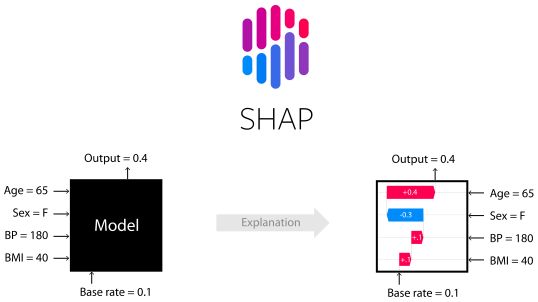
Explain model predictions by estimating each feature's contribution.
Useful forTeams documenting and investigating model behavior.
Evaluate policy as code for access and operational decisions across applications and infrastructure.
Useful forCentral policy rules for agent actions and services.
Detect and redact personal information in text, images and structured data.
Useful forTeams reducing personal data in prompts, logs and datasets.
Apply input and output validators and help produce structured model responses.
Useful forApplication-level checks on AI input and output.
Define programmable rules around conversational AI inputs, outputs, and dialogue flows.
Useful forApplications that need explicit conversational behavior rules.
Assess dataset and model bias with fairness metrics and mitigation algorithms.
Useful forPractitioners comparing bias measurements and mitigation approaches.
Collect lineage metadata about datasets, jobs and their runs.
Useful forTeams tracing the data pipelines that feed AI systems.
Measure group fairness and apply mitigation methods to machine learning models.
Useful forTeams assessing how model outcomes differ across groups.
Write, validate, and evaluate fine-grained authorization policies separately from application code.
Useful forDefining who may use which tools and resources.
A governance testing toolkit for assessing AI systems against defined principles and tests.
Useful forTeams building an evidence-based AI governance process.
Ship with a process
Bring structure to AI-assisted planning, development and delivery.
Give coding agents a repeatable process for design, testing, and review.
Useful forDevelopers who want delivery practices embedded in agent skills.
Turn product intent into specifications, plans, and implementation tasks.
Useful forTeams that want specifications to guide coding-agent work.
Manage proposed changes through specs, tasks, implementation, and verification.
Useful forTeams evolving existing products with coding agents.
Use role-based skills and workflows for planning and software delivery.
Useful forTeams that want a structured path from idea to implementation.
Track agent work with persistent issues, dependencies, and claimable tasks.
Useful forMulti-session coding work that needs durable task state.
Drive coding agents through discussion, planning, execution, verification, and delivery.
Useful forLong-running projects that need clear phases and fresh task context.
Connect product requirements, epics, issues, and agent implementation work.
Useful forTeams coordinating agent work through GitHub issues.
Guide software work through requirements, design, construction, and review.
Useful forTeams adopting a repeatable AI-assisted development lifecycle.
Define agent-based repository automation in Markdown and run it through GitHub Actions.
Useful forIssue triage, review assistance, and maintenance automation.
Use structured requirements, design, tasks, and review with coding agents.
Useful forTeams applying specification-driven development across agent tools.
Connect your knowledge
Find relevant information and give AI applications useful context.
Turn documents into searchable context for retrieval and agent applications.
Useful forTeams that need document parsing and a retrieval interface.
Connect documents and data to retrieval and agent applications.
Useful forApplications that need ingestion, indexing, and retrieval components.
Index and search large vector collections for AI applications.
Useful forTeams that need scalable vector retrieval infrastructure.
Combine graph relationships and vector retrieval for document questions.
Useful forTeams exploring graph-enhanced retrieval.
Store vectors and search them with filters and hybrid retrieval.
Useful forApplications that need a dedicated vector search service.
Build temporal context graphs that track changing facts and their sources.
Useful forAgents that need history-aware knowledge and relationship retrieval.
Store and retrieve embeddings and documents for AI applications.
Useful forDevelopers who want an accessible retrieval data layer.
Compose retrieval, generation, and agent pipelines from reusable components.
Useful forPython teams building search and document-answering systems.
Add vector storage and similarity search to PostgreSQL.
Useful forTeams that want retrieval next to existing relational data.
Store objects and combine vector, keyword, and filtered retrieval.
Useful forApplications that need integrated search over structured context.
Run your models
Serve models with the performance and control your workload needs.
Download and run models locally, then connect them to applications and coding agents.
Useful forDevelopers starting with local model inference.
Run language models in C and C++ across CPUs and supported accelerators.
Useful forDevelopers who need local or embedded model inference.
Serve language models with batching, memory management and distributed inference.
Useful forTeams operating high-throughput model endpoints.
Serve language, vision, voice and other models behind compatible APIs.
Useful forTeams building a self-hosted endpoint across multiple model types.
Compose and scale model inference services on Ray's distributed runtime.
Useful forTeams serving Python model pipelines across multiple workers.
Serve language and multimodal models with optimized inference runtimes.
Useful forTeams running agent workloads, model services and RL rollouts.
Optimize and run language-model inference on NVIDIA GPUs.
Useful forTeams tuning serving performance for NVIDIA hardware.
Package models and Python inference logic as deployable APIs.
Useful forTeams turning custom AI code into model services.
Compress, deploy and serve language models with optimized inference engines.
Useful forTeams tuning language-model inference and quantization.
Deploy and scale generative and predictive AI inference on Kubernetes.
Useful forPlatform teams standardizing model services on Kubernetes.
Measure what works
Test model outputs and agent behaviour against defined criteria.
Write tests for LLM applications, agent steps and complete agent trajectories.
Useful forDevelopers adding AI quality checks to test workflows.
Evaluate retrieval and generation quality and create test data for LLM applications.
Useful forTeams assessing RAG answers and retrieval quality.
Run language-model benchmarks through a shared evaluation framework.
Useful forResearchers comparing model capabilities across repeatable tasks.
Measure AI and data quality with reports, test suites and monitoring dashboards.
Useful forTeams checking data drift and ML or LLM quality over time.
Compare language and vision-language models across capability benchmarks.
Useful forTeams running broad model evaluation suites.
Evaluate multimodal models across text, image, video and audio tasks.
Useful forResearchers testing models beyond text-only benchmarks.
Evaluate agent steps and RAG responses using trace-linked feedback functions.
Useful forTeams locating quality and cost regressions inside agent runs.
Evaluate model capabilities, agent tasks and inference service performance.
Useful forTeams checking both model quality and serving behavior.
Build repeatable evaluations for models and agents with tools, dialogs and scoring.
Useful forTeams evaluating agent behavior and model capabilities.
Evaluate language models across inference backends and inspect sample-level results.
Useful forTeams comparing models with configurable tasks and metrics.
Bring the work together
Give people a shared place to work with models, tools and knowledge.
Design, test, and expose agent and retrieval flows in a visual workspace.
Useful forTeams prototyping AI workflows through a visual interface.
Create document chat workspaces and agents with local or hosted models.
Useful forTeams that want a configurable knowledge workspace.
Use models, agents, tools, and knowledge collections in a desktop application.
Useful forUsers who want one interface for several AI providers.
Provide a shared chat workspace with models, agents, files, and tools.
Useful forTeams that want a self-hosted interface across model providers.
Chat with local models or connected providers in a desktop workspace.
Useful forPeople who want a local AI chat application.
Search personal knowledge, chat with documents, and run custom assistants.
Useful forA self-hosted personal research and knowledge workspace.
Give a team a chat and research workspace connected to its knowledge.
Useful forOrganizations exploring search and answers across internal sources.
Build agent workflows with visual, chat, and code-based tools.
Useful forTeams assembling AI automations around services and knowledge.
Build automations that connect AI agents, data, and application tools.
Useful forTeams creating visual AI-assisted business workflows.
Build applications with an AI workspace that runs on your own computer.
Useful forUsers who want a local application-building interface.
A useful starting point
Good decisions need more than a logo and a score. Follow the evidence, check the licence and try the tool against your own needs.
Suggest a project or correctionWe consider category fit, community interest and the quality of available source material. This is a curated research shortlist, not an exhaustive ranking. GitHub stars help show interest; they do not decide whether a project fits your needs. A tool can fit more than one category; we show its primary use here.
We display GitHub stars as a dated popularity signal. They are not a security score, a user rating or a measure of quality. We do not invent review scores. The source-check date tells you when the recorded facts were checked, not when the software was tested.
Each licence label links to the upstream terms. Some repositories have separate terms for enterprise code, hosted services or assets. Read each project's scope note before adoption. The licence filter groups labels for discovery; it does not determine your compliance obligations.
Research checks are scheduled hourly. Reviewed catalogue updates are scheduled weekly. Each record shows its actual check date and source links. Records older than 30 days show “Recheck due”. A repository push can be a documentation change; it does not prove a maintained release. This directory is a research snapshot. Follow Radar for tracked release updates.
Listing a project does not imply a partnership or endorsement. Project logos or maintainer avatars identify their owners. Inclusion and popularity are not paid rankings. Consultation is a separate Nextex service.
Visit the maintainers. Report a useful issue. Improve a guide. Sponsor the work your team depends on.
We plan to include upstream contributions in consulting engagements. Each proposal will define the contribution. We will publish completed contributions when the programme starts.
From discovery to a working system
We help your team assess the fit, test the boundaries and plan adoption around your own constraints.
Explore an assessment Talk through your shortlist